Where Do Dj’s Get Their Music From?
Where Do DJs Get Their Music? DJ Music Guide
Where do DJs get their music? DJs usually build their music libraries using a combination of DJ record pools, online music stores, artist-approved downloads, promotional tracks, streaming integrations and physical music such as vinyl.
Professional DJs rarely rely on just one source. Where they get their music often depends on the type of DJ they are, the genres they play and the events they perform at.
A wedding DJ, for example, may need music covering several decades and genres. A club DJ might spend more time searching for new releases, remixes and tracks within a particular style.
So, let’s look at where DJs get their music, how they discover new tracks and how they build a library they can rely on.
Where Do DJs Get Their Music From?
There isn’t one secret website containing every track professional DJs use.
Instead, DJs generally combine several sources, including:
- DJ record pools
- Online music stores
- Bandcamp
- SoundCloud
- Streaming services with DJ integrations
- Record labels and promotional releases
- Artists and producers
- Vinyl and physical record stores
- Their own edits or productions
An important distinction is that finding music and obtaining music aren’t always the same thing.
A DJ might discover a track through another DJ’s set, social media, SoundCloud or a streaming playlist before obtaining an appropriate copy through a record pool, music store or directly from the artist.
That process of constantly discovering and collecting music is sometimes referred to as crate digging, a term inherited from DJs physically searching through crates of vinyl records.
Where Do DJs Get Their Music? DJ Record Pools
DJ record pools are one of the most useful ways for working DJs to build and maintain a music library.
Rather than purchasing every song individually, DJs subscribe to a service that provides access to downloadable music.
Record pools can be particularly useful because they may provide versions created with DJs in mind, including:
- Clean edits
- Explicit versions
- Intro and outro edits
- Extended versions
- Remixes
- Acapellas
- Instrumentals
Current specialist DJ resources continue to identify record pools as one of the main ways DJs obtain DJ-ready music. Digital DJ Pool
For DJs regularly performing at parties and events, having access to different versions of songs can be extremely useful.
Where Do DJs Buy Their Music?
DJs can also buy individual tracks from online music stores.
This is useful when a DJ wants a specific song rather than subscribing to a larger library.
One well-known example is Beatport, which specialises heavily in electronic and dance music and sells individual tracks and releases. Beatport
Buying tracks individually also means DJs can gradually create a carefully selected collection instead of downloading large amounts of music they may never actually use.
For professional DJs, quality is more important than simply having thousands of tracks.
A smaller organised library containing music you know well can often be more useful than an enormous collection you barely recognise.
Where Do DJs Find Independent and Underground Music?
Some DJs deliberately look beyond mainstream music stores.
Bandcamp is both an online record store and music community where listeners can discover and purchase music directly from artists and labels. Bandcamp says purchases can include high-quality downloads, making it particularly useful for DJs looking for independent or less mainstream releases. Bandcamp
This can be especially useful for DJs who want their sets to sound different from everyone else’s.
Instead of only looking at mainstream charts, DJs can explore particular genres, labels and independent artists.
Do DJs Get Their Music From SoundCloud?
Yes, SoundCloud can be an important music-discovery tool for DJs.
Artists, producers and DJs regularly use the platform to share original tracks, mixes, edits and remixes.
Some artists also make tracks available as authorised downloads or provide links showing listeners where they can obtain them. Current DJ guides particularly highlight SoundCloud for discovering underground tracks, edits and artist-approved downloads. setlist.id
However, finding a song on SoundCloud does not automatically mean a DJ has permission to download it from somewhere else.
If an artist provides an official download or purchase link, DJs should use that rather than ripping the streamed audio.
Do DJs Get Their Music From Spotify?
This is where things can get confusing for beginners.
Consumer streaming services can be useful for discovering music and building ideas for playlists, but streaming a song is different from owning a downloadable music file.
Some DJ software and hardware supports particular streaming services through official integrations. However, availability, offline functionality and supported services can change.
For that reason, DJs should check whether their specific software and streaming subscription support the way they intend to perform.
For a working event DJ, having a properly prepared local music library also reduces dependence on an internet connection.
How Do DJs Get New Music Before Everyone Else?
Established DJs may receive music directly from:
- Record labels
- Artists
- Producers
- Promotional mailing lists
- Music promotion services
- Other DJs and industry contacts
Labels and artists may send unreleased or upcoming music to DJs in the hope that it will be played and reach a wider audience.
This is particularly relevant in club and electronic music, where DJs can help introduce audiences to new releases.
Newer DJs are unlikely to immediately receive large amounts of unreleased music. However, as they build relationships within particular genres and music communities, promotional releases can become another source of new tracks.
Where Do Wedding DJs Get Their Music?
Wedding DJs get their music from many of the same places as other professional DJs, but the type of library they need can be very different.
A wedding can bring several generations together on one dance floor.
That means a wedding DJ may need everything from older classics and Motown to R&B, pop, dance, hip-hop, Afrobeats and current chart music, depending on the couple and their guests.
There may also be specific tracks needed for:
- Guest arrival
- Couple entrances
- First dances
- Parent dances
- Cake cutting
- Evening celebrations
- Final songs
This is why wedding DJing isn’t simply about downloading the latest popular songs.
A useful wedding music library needs range.
It also needs to reflect the couple. Requests provided before the wedding can help the DJ understand their taste while still leaving enough flexibility to react to the dance floor on the night.
Where Do Party DJs Get Their Music?
Party DJs also need a varied library.
Birthdays, anniversaries and private celebrations can involve guests with completely different musical tastes.
Therefore, party DJs may build collections covering multiple genres and decades rather than specialising in only one type of music.
Record pools can help working DJs keep their libraries current, while individual purchases can fill gaps when a client requests a particular track.
Over time, DJs can also learn which songs consistently work for different audiences and occasions.
Do DJs Pay for Their Music?
Often, yes.
DJs may purchase individual tracks, subscribe to record pools, buy physical records or pay for services that integrate music into DJ software.
There are also legitimate free downloads.
For example, an artist may deliberately make a song available for free through an official download link.
The important distinction is between music intentionally made available by the rights holder and copying music from somewhere simply because it can technically be accessed.
Can DJs Download Music From YouTube?
DJs should not assume that because a song can be streamed on YouTube, they can simply rip the audio and add it to a professional music library.
Aside from rights and platform considerations, ripping streamed audio can also result in inconsistent or unsuitable sound quality.
Professional sound systems can expose poor-quality audio much more clearly than phone speakers or basic headphones.
For paid events, DJs are better served by building their library through legitimate, reliable music sources.
Where Do DJs Get High-Quality Music?
Professional DJs should pay attention to audio quality, not only the song itself.
Common digital formats can include:
- MP3
- WAV
- AIFF
- FLAC
The appropriate format depends on the DJ’s equipment, storage and workflow.
What matters is sourcing the file legitimately and knowing its actual quality rather than assuming a file is high quality because of its filename.
This becomes especially important when music is played loudly through professional PA systems.
How Do DJs Find New Music?
Finding new music is a continuous part of being a DJ.
DJs can discover tracks through:
- Other DJ sets
- Record pools
- Music charts
- Streaming playlists
- SoundCloud
- Bandcamp
- Record labels
- Radio
- Social media
- Recommendations from other DJs
- Shazam and track-identification tools
- Following artists and producers
The best DJs don’t necessarily find every song in the same place.
Instead, they develop a system for discovering music that suits their audience and then obtaining an appropriate copy for their library.
This discovery versus acquisition distinction is something several current guides emphasise and is useful for beginners to understand. Hits! District.
How Do DJs Organise Their Music?
Knowing where DJs get their music is only half of the job.
Once the tracks have been collected, the library needs to remain usable.
Depending on the DJ, music might be organised by:
- Genre
- Decade
- Energy
- Event type
- BPM
- Key
- Artist
- Mood
- Personal playlists or crates
Wedding and party DJs may also create folders or playlists for particular moments or types of audience.
Organisation matters because a DJ sometimes has only seconds to decide what should play next.
Finding the right track quickly can be just as important as owning it.
Do Professional DJs Own All Their Music?
Not necessarily.
Some DJs purchase and store much of their music locally. Others combine owned downloads with record pools, promotional releases, physical media and supported streaming integrations.
The exact approach depends on the DJ.
However, professional DJs need a reliable way of accessing the music required for their performances.
For an event DJ, relying entirely on one online service can introduce unnecessary risk if the internet connection or service becomes unavailable.
Where Do DJs Get Their Music? FAQs
Where Do Professional DJs Get Their Music?
Professional DJs can get their music from DJ record pools, online stores, artists, labels, promotional services, Bandcamp, SoundCloud, physical records and supported streaming services. Most working DJs combine several sources rather than relying on one platform.
Where Do DJs Download Their Music?
DJs can download music from legitimate record pools, online stores and artist-authorised download pages. The best source depends on the genres they play and whether they need individual tracks, large amounts of new music or specialist DJ edits.
Where Do DJs Buy Their Music?
DJs can buy music from specialist stores such as Beatport, directly from artists and labels through platforms such as Bandcamp, and from other legitimate digital music retailers.
Do DJs Use Spotify for Music?
DJs may use consumer streaming platforms to discover music and plan playlists. Actual DJ performance support depends on the DJ software, hardware, streaming service and subscription being used, so DJs should check the current compatibility of their setup.
Where Do DJs Get Free Music?
Some artists and labels release authorised free downloads through their websites, SoundCloud, Bandcamp or promotional campaigns. DJs should make sure the download has genuinely been provided by the artist or rights holder rather than using ripped copies.
Do DJs Have to Buy Every Song?
No. DJs can obtain music through several legitimate routes, including purchased downloads, record pools, promotional releases, artist-authorised free downloads and compatible streaming services.
Where Do DJs Get Their Music? Building the Right Library
So, where do DJs get their music?
There isn’t one answer.
Professional DJs can combine record pools, online music stores, Bandcamp, SoundCloud, artist and label promotions, streaming integrations and physical records to build their collections.
More importantly, a good DJ library isn’t simply the biggest one.
DJs need music they understand, can find quickly and can use appropriately for the audience in front of them.
For wedding and party DJs, this becomes particularly important. Every event has a different crowd, different musical tastes and different moments that need the right soundtrack.
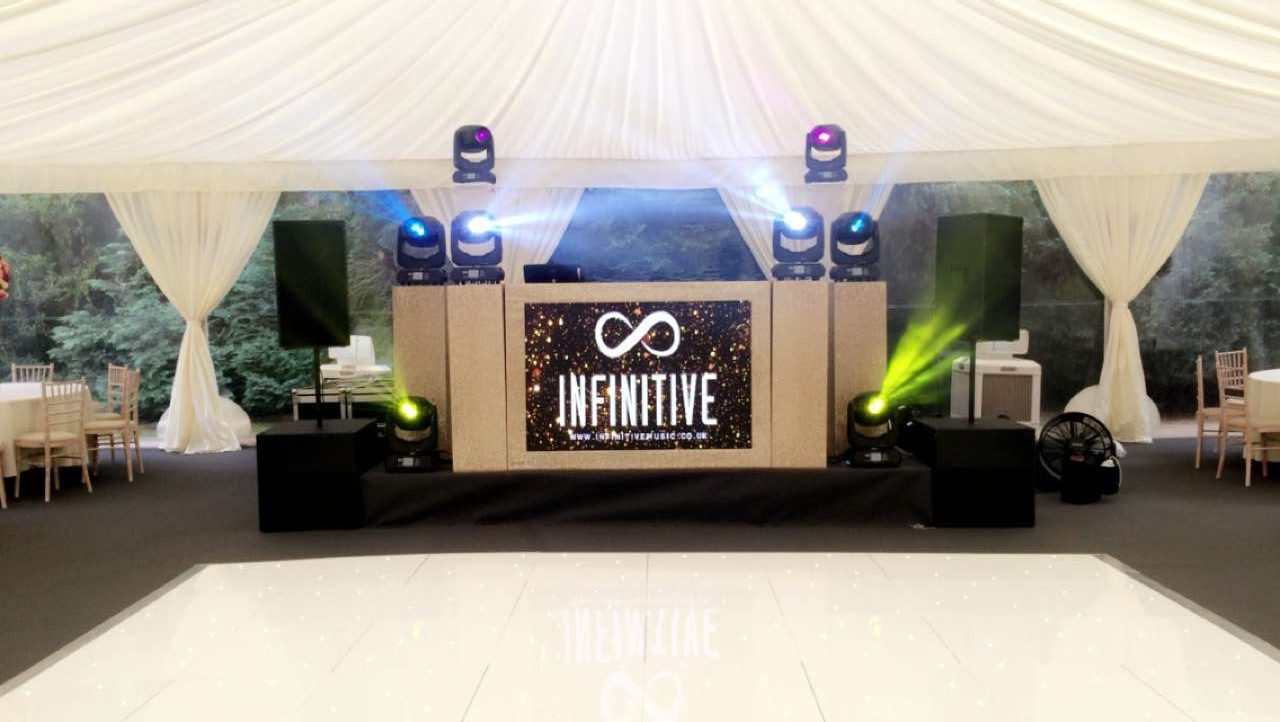
At Infinitive Music, music selection is part of creating the atmosphere of the event — from important wedding moments through to keeping the dance floor moving later in the evening.
If you’re planning a wedding, party or event in Birmingham, get in touch with Infinitive Music to discuss the music and entertainment for your event.